Move to bend. Click to ripple.
PERSONAL PORTFOLIO / 2026

AI/ML Engineer · Real-Time Voice AI, LLM Agents & Retrieval Systems · Washington, DC

Complex systems.
Clear possibilities.

I build the loop, then test the edges. From live voice conversations to grounded retrieval, the work is only done when the evidence holds up.

AI ENGINEER AT SUPERCX
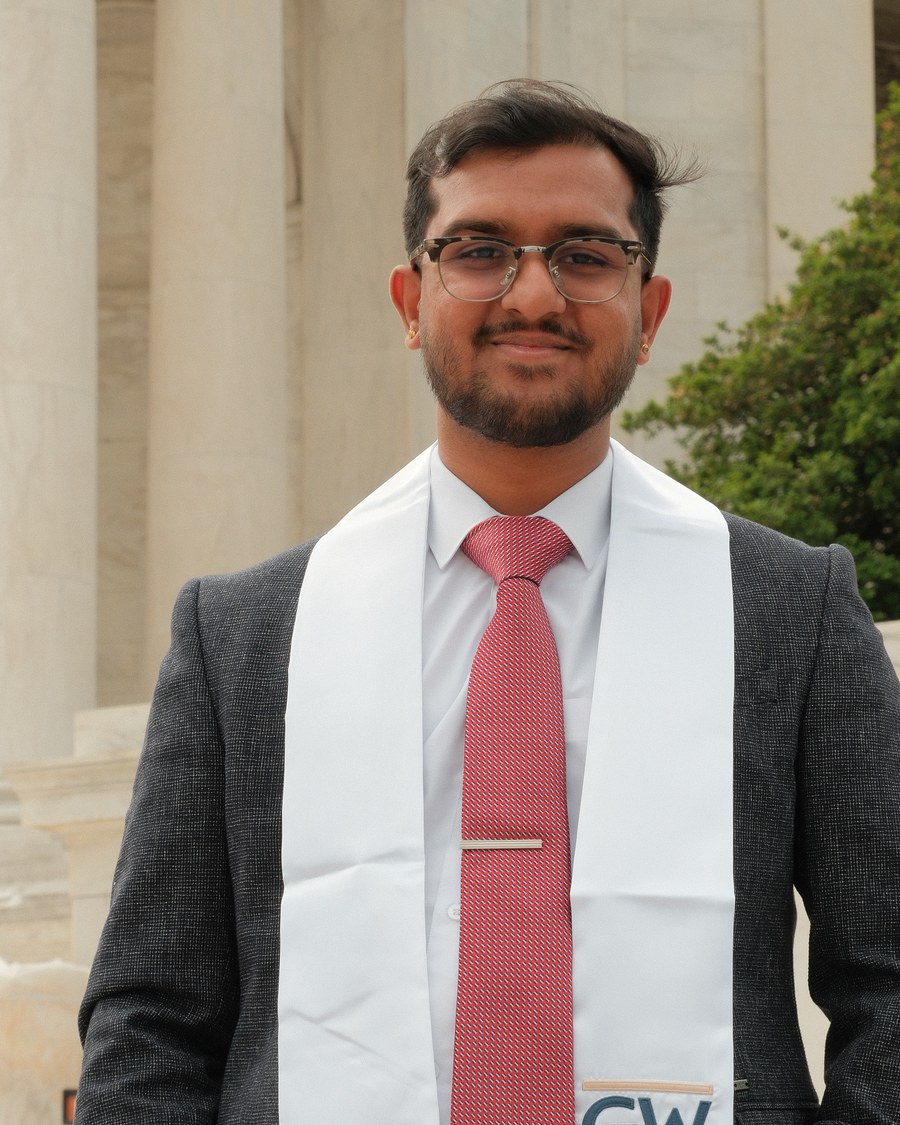
Pramod Krishnachari, AI and ML engineer
PRAMOD KRISHNACHARIWASHINGTON, DC ↗
BUILD. QUESTION. EVALUATE. REPEAT.SCROLL TO EXPLORE ↓
AIS vessel records
54.7M
research papers
22,522
p99 retrieval latency
350 ms
pytest regression tests
32
Results reported in the resume. Read the source ↗

Serious systems.
Visible evidence.

A closer look at the data, the decisions, and the evaluation behind the work.

More first-class work below: FitFindr, TakeMeter, and The Unofficial Guide. Explore CodePath projects ↓

Curiosity is
the constant.

Pramod Krishnachari, AI and ML engineer
PRAMOD KRISHNACHARIWASHINGTON, DC ↗
12.97° N, 77.59° EBengaluru → Washington, DC38.91° N, 77.04° W

I’m Pramod Krishnachari.

I like the part where a promising idea has to meet the real world.

A voice agent handling an interruption. A retrieval system explaining a result. A manufacturing dataset finally telling the full story. I bring modeling, data engineering, and evaluation into the same conversation.

My foundation is a B.Tech in Computer Science with an AI & ML specialization from Presidency University, followed by an M.S. in Data Science at George Washington University. Today, I build production voice AI at SuperCX.

Washington, DC · Open to SF Bay AreaF-1 OPT, eligible for STEM OPT extension.
01

Build the whole loop.

Data, models, interfaces, feedback.

02

Measure what matters.

Test the difficult cases, too.

03

Make it understandable.

A result should come with a reason.

The evaluation loop.

Across agents, retrieval, and classification: establish a baseline, make a targeted change, re-measure, and document what still fails.

  1. 01

    Establish a baseline.

    Start with a fixed scenario set, a reference model, or a clearly defined metric.

  2. 02

    Make a targeted change.

    Trace the failure to a stage. Change the prompt, tool contract, retrieval strategy, or model.

  3. 03

    Re-measure on the same set.

    Keep the comparison honest. Evaluate the change against the same criteria.

  4. 04

    Document what still fails.

    A useful result includes the remaining failure modes and their causes.

Depth in the details.
Range in the toolkit.

The languages, methods, and systems I use to move from a promising idea to a dependable implementation.

11 skill categories shown

Languages

The working languages behind models, services, and analysis.

  • Python
  • SQL
  • R
  • Bash

ML & Deep Learning

Compare representations, tune deliberately, and inspect what a model learns.

  • PyTorch
  • scikit-learn
  • Hugging Face Transformers
  • SBERT
  • SciBERT
  • BERTopic
  • BM25
  • FAISS
  • Qdrant
  • ChromaDB
  • Knowledge distillation
  • ResNet-50
  • EfficientNet
  • Vision Transformer (ViT)
  • PCA
  • t-SNE
  • GridSearchCV
  • Cross-validation

LLM & Agents

Connect reasoning to tools, grounding checks, and an explicit evaluation loop.

  • LangGraph
  • LangChain
  • LlamaIndex
  • RAG
  • Multi-agent orchestration
  • Tool use / function calling
  • Prompt design
  • Grounding & hallucination analysis
  • Guardrails
  • Evaluation rubrics
  • Regression testing
  • Scenario-based QA
  • Human-in-the-loop
  • OpenAI API
  • Anthropic API
  • Gemini API
  • Vertex AI
  • Real-time voice agents

Voice & Telephony

Keep the conversation moving through interruptions, channels, and live audio.

  • Twilio · voice, WhatsApp, Telegram, media streams
  • Deepgram (STT)
  • Cartesia (TTS)
  • Streaming audio
  • Barge-in & interruption handling
  • WebSockets

Data Engineering

Make the underlying data trustworthy before making a claim about it.

  • PySpark
  • Databricks
  • Delta tables
  • BigQuery
  • PostgreSQL
  • Redis
  • Azure Data Lake Storage Gen2
  • Azure Data Factory
  • ETL/ELT
  • Schema validation
  • Data quality checks

Cloud & Infrastructure

Carry the model into a service that can be deployed and maintained.

  • GCP · Vertex AI, BigQuery, GCS, GCE
  • AWS · EC2, S3
  • Docker
  • Git
  • GitHub Actions CI/CD
  • FastAPI
  • Flask
  • REST/JSON

Reliability & Observability

Because a regression should trace to a stage, not to a conversation.

  • Structured logging
  • Stage-level tracing
  • p99 latency & provider benchmarking
  • Release gating
  • Failure-mode triage
  • pytest
  • Evaluation harnesses

BI & Visualization

Give stakeholders a shared view of the numbers and what they mean.

  • Power BI
  • Tableau
  • Plotly
  • Streamlit
  • Matplotlib
  • Seaborn
  • Excel

Methods & Testing

Use baselines, statistical tests, and failure analysis to challenge the result.

  • A/B testing
  • Hypothesis testing
  • Time series forecasting (ARIMA)
  • Clustering (K-Means)
  • Anomaly detection
  • Control charts
  • Feature engineering

Optimization

Make the trade-offs explicit, then test the solution against constraints.

  • Gurobi
  • Mixed-integer programming
  • Monte Carlo simulation

AI Coding Tools

A working toolkit for AI-assisted software development.

  • Claude Code
  • Cursor
  • Windsurf
  • Gemini CLI
  • GitHub Copilot

A path built
by doing.

Production voice AI. Manufacturing analytics. Data systems. Full responsibilities, with the evidence kept in view.

May 2026 – Present 5 mosSuperCXAI EngineerRemoteVoice across 3 channelsExpandCollapse
  • Built and maintained a production real-time voice AI pipeline on Google Vertex AI, chaining Deepgram speech-to-text, Gemini real-time reasoning, and Cartesia text-to-speech, and owning the latency and quality trade-offs across every stage of the conversational loop.
  • Deployed Gemini real-time models through Vertex AI for streaming audio processing and in-turn reasoning, handling partial transcripts, barge-in, and interruption so the agent responds mid-utterance instead of waiting for end of speech.
  • Integrated Twilio telephony to reach client customers over standard phone calls, WhatsApp, and Telegram from a single conversation backend, mapping each channel to shared session state and channel-specific media handling.
  • Streamed bidirectional audio over WebSockets between Twilio media streams and the Vertex AI inference path, managing buffering, sample-rate conversion, and reconnection so live calls degraded gracefully rather than dropping.
  • Benchmarked competing speech-to-text, LLM, and text-to-speech providers on transcription accuracy, response quality, and end-to-end latency, documenting results so provider selection was driven by measured evidence rather than vendor claims.
  • Designed structured evaluation plans for conversational agents covering intent handling, fallback behavior, tool-call correctness, and failure modes, turning ad hoc spot checks into a repeatable release gate.
  • Iterated system prompts and tool definitions using production call analytics, isolating recurring failure patterns and validating each change against a fixed scenario set before rollout.
  • Instrumented the pipeline for observability across turn-level timings, channel, and provider responses, making regressions traceable to a specific stage rather than to the conversation as a whole.
From the resume ↗
Aug 2025 – May 2026 10 mosThe George Washington University School of BusinessStudent Technical Support Assistant II · Part-timeWashington, DCReliable classroom technologyExpandCollapse
  • Supported technology-enabled classrooms through proactive system monitoring and troubleshooting, resolving audiovisual, network, and presentation-system faults before they interrupted scheduled instruction.
  • Collaborated with campus IT teams to diagnose and resolve recurring technical issues, escalating with reproducible detail so root causes were addressed rather than repeatedly patched.
  • Applied data-driven problem-solving to recurring support tickets, identifying patterns across rooms and equipment types to prioritize the fixes that removed the most downtime.
  • Documented setup procedures and known failure modes for classroom technology, reducing time to resolution for other assistants handling the same equipment.
  • Contributed to a reliable academic environment across School of Business facilities by maintaining readiness checks ahead of high-traffic teaching blocks.
From the resume ↗
Dec 2023 – Aug 2024 9 mosSuprajit Engineering Limited · Electronics DivisionData Science & Analytics InternBengaluru, IndiaOne yield definition · 3 teamsExpandCollapse
  • Built a trustworthy first-pass-yield dataset for digital instrument clusters by joining production orders, serial numbers, test attempts, rework records, firmware versions, fixture IDs, and failure codes in SQL and pandas, replacing a headline pass rate that concealed unstable process behavior.
  • Reconstructed the full test journey for each serial number and standardized reason codes across first test, retest, rework, and final disposition, separating true product defects from communication timeouts, incomplete tests, and equipment-driven repeats.
  • Delivered Power BI views of yield, retest frequency, and rework by product, line, shift, fixture, and firmware version, giving quality, test, and production teams one shared definition of yield instead of three conflicting ones.
  • Engineered features from raw sensor and end-of-line test curves in Python, computing smoothness, slope consistency, endpoint error, signal noise, and hysteresis, then applied control charts and anomaly flags to surface units drifting while still inside specification limits.
  • Built fixture health indicators by joining test results with fixture IDs, calibration history, golden-sample measurements, and maintenance events, calculating rolling deviations that distinguished gradual measurement drift from sudden fixture failure.
  • Processed larger event and traceability tables with PySpark on Azure Databricks over Delta tables, standardizing join keys, timestamp alignment, and duplicate handling so product genealogy could be reconstructed reliably across ERP, SMT, flashing, and test systems.
  • Negotiated metric definitions directly with production supervisors, quality engineers, and test engineers, submitting every definition for senior review before implementation so the resulting numbers were accepted rather than disputed.
From the resume ↗
Dec 2022 – Apr 2023 5 mosTequed LabsData Science InternBengaluru, India50,000+ daily transactionsExpandCollapse
  • Built a scalable PySpark ETL pipeline processing 50,000+ daily transactions with automated schema validation, deduplication, and structured logging for ongoing data quality monitoring.
  • Audited fragmented client datasets spanning 5 sources and standardized schemas, then developed Python and SQL EDA pipelines with pandas, Matplotlib, and Seaborn that surfaced previously unknown demand segments.
  • Cut manual data-cleaning time by roughly 40% by replacing ad hoc spreadsheet steps with reproducible, version-controlled transformation code.
  • Built 20+ interactive Power BI and Tableau dashboards driven by SQL-based KPIs, enabling real-time operational tracking across the client portfolio.
  • Partnered with non-technical client stakeholders to translate operational pain points into analytics requirements, presenting weekly performance insights and short written update notes summarizing changes.
From the resume ↗
Jun 2022 – Nov 2022 6 mosMaruti Flex Traders LLPData Analyst InternBengaluru, India15% less excess inventoryExpandCollapse
  • Built ARIMA demand forecasting models on 5,000+ SKUs in Python to address chronic inventory inefficiency, reducing excess inventory by 15% across two trading workflows.
  • Implemented K-Means clustering in scikit-learn to segment behavioral profiles across 20,000+ customer records, enabling targeted outreach and improving customer retention by 18%.
  • Developed a modular Python reporting framework that automated weekly inventory summaries previously assembled by hand, reducing manual reporting effort by 35% and freeing analyst time for deeper analysis.
  • Created automated Tableau dashboards with KPI tracking across 30+ product lines, presenting inventory forecasts and segment insights to operations managers in weekly reviews.
  • Documented pipeline assumptions, edge cases, and refresh steps in a shared internal wiki so the next analyst could reproduce every report without re-deriving the logic.
From the resume ↗

Learning by
building.

Substantial engineering work, supervised projects, and a visible record of how the systems were evaluated.

The Build Fellowship

Open Avenues Foundation · Build Student Consultant

2025–2026 / REMOTE

Build Projects are eight-week experiential learning engagements supervised by an industry project leader, not employment.

Sep – Nov 2025BUILD / 01

AI-Powered Image Retrieval With Vector Databases

Project leader: Kamalesh Kalirathinam

top-5 accuracy improvement
25%
p99 retrieval latency
350 ms
image embeddings
10,000+

PyTorch CNN embeddings feed FAISS and Qdrant retrieval, with PCA and t-SNE used to inspect the embedding space. IVF-versus-HNSW ablations compare retrieval quality against latency; an AWS deployment and Streamlit interface expose the final pipeline for review.

  • Built an image retrieval system using PyTorch CNN embeddings with FAISS and Qdrant vector databases, applying PCA and t-SNE for dimensionality reduction and embedding quality analysis across 10K+ image embeddings.
  • Benchmarked three embedding architectures (ResNet-50, EfficientNet, ViT) on precision@k and recall, tuning hyperparameters via GridSearchCV with 5-fold cross-validation in scikit-learn and improving top-5 accuracy by 25%.
  • Ran ablation studies across vector index configurations (IVF versus HNSW) to quantify the search quality against latency trade-off and select the final index.
  • Deployed the end-to-end pipeline on AWS with Docker containerization and GitHub Actions CI/CD, achieving 350 ms p99 retrieval latency.
  • Built an interactive Streamlit dashboard for visual search demonstration, giving non-technical reviewers a way to inspect retrieval quality directly.
Mar – Apr 2026BUILD / 02

Drone Flight Planner System: Flight Path for Efficient Data Capture

Project leader: Ayush Baid

flight-time reduction target
25%

A weighted graph represents the flight environment; A* and Dijkstra search update route costs as obstacles appear and re-route without searching the entire space again. Planning, validation and telemetry APIs connect the model to downstream control software, with route-safety checks and degenerate-case regression tests in CI.

  • Designed an autonomous drone flight path planner that computes efficient routes between waypoints using A* and Dijkstra graph search with live obstacle avoidance, targeting a 25% reduction in flight time versus naive routing.
  • Modeled the flight environment as a weighted graph with dynamic cost updates, allowing the planner to re-route around newly detected obstacles without recomputing the full search space.
  • Architected RESTful APIs exposing planning, validation, and telemetry endpoints so the planner could be driven programmatically by downstream flight control software.
  • Built a CI/CD validation pipeline that automatically tests planned routes against safety constraints before deployment to physical hardware, reducing manual QA overhead.
  • Wrote regression tests covering degenerate cases such as unreachable waypoints, dense obstacle fields, and boundary violations, so safety failures surfaced in CI rather than in flight.
Jun – Aug 2025BUILD / 03

Multi-Objective Investment Portfolio Optimization

Project leader: Ce Luo

Information Ratio
0.824
trades
4
less model calibration time
40%

A Python and Gurobi mixed-integer program balances tracking error, transaction cost and trade frequency under explicit position and trade constraints. Monte Carlo paths stress-test allocations across risk tolerances, while reusable constraint functions make calibration repeatable.

  • Constructed a portfolio optimizer in Python and Gurobi selecting the best mix of 15 assets under real-world trading constraints including position limits, trade sizes, and maximum trade counts, delivering a tuned portfolio in 4 trades with an Information Ratio of 0.824.
  • Formulated the problem as a mixed-integer program balancing tracking error, transaction cost, and trade frequency, making the trade-offs explicit rather than hidden inside a single objective.
  • Ran Monte Carlo simulations across multiple risk-tolerance settings to identify the optimal risk-return balance and stress-test allocations against varied market paths.
  • Automated constraint pipelines with reusable functions, cutting model calibration time by 40% and improving the interpretability of the resulting allocations for reviewers.
  • Documented model assumptions, data sources, and limitations so results could be reproduced and challenged by other student consultants on the team.

Applications of AI Engineering AI201

Four projects. A recurring discipline: establish a baseline, measure a targeted change, and document the remaining failures.

SUMMER 2026 / 01

Provenance Guard

A verdict should come with a reason.

  • Built a Flask REST service that scores submitted text for AI provenance by combining a model signal and a style signal under an explicit weighted rule, returning a per-signal breakdown instead of a single opaque verdict.
  • Documented what each signal measures and, critically, what it cannot see, then used those blind spots to construct an adversarial attack set that deliberately evaded the scorer.
  • Hardened the service against the attack set and added request rate limiting, re-running the full suite before and after to quantify which evasions the fix actually closed.
  • Designed an appeal workflow allowing flagged submissions to be re-reviewed with recorded justification, keeping human judgment in the loop for contested decisions.
  • Wrote a 32-test pytest regression suite covering scoring edge cases, malformed payloads, and appeal state transitions, so rubric changes could not silently alter prior outcomes.
  • Structured scoring as configurable weights so evaluation criteria could be re-tuned without rewriting the service.
SUMMER 2026 / 02

FitFindr

An agent that knows when to re-plan.

  • Built a planning-loop agent over three tools for listing search, outfit suggestion, and result card generation, decomposing user requests into ordered tool calls and re-planning when a call returned nothing usable.
  • Specified a tool inventory with typed inputs, explicit return contents, and a defined empty-result contract for every tool, so the agent branched on absent data instead of crashing mid-loop.
  • Ran a structured before-and-after evaluation across a fixed query set, assigning pass or fail verdicts, diagnosing each failure to a specific loop step, and shipping one targeted fix measured against the same set.
  • Logged full loop traces per run, making it possible to diagnose why a specific plan was chosen rather than inspecting only the final answer.
  • Wrote pytest coverage targeting agent failure modes including tool selection errors, unbounded planning loops, and empty tool responses.
SUMMER 2026 / 03

TakeMeter

Better labels. More meaningful evaluation.

  • Designed a label taxonomy for community post classification with written definitions, worked examples, and an explicit decision rule for the hardest boundary between adjacent labels.
  • Built and hand-labeled the training dataset, then trained a classifier locally and benchmarked it against a zero-shot baseline rather than reporting accuracy in isolation.
  • Evaluated with a per-class confusion matrix and an inter-annotator agreement report, using disagreement between labelers to expose where the taxonomy itself was ambiguous.
  • Diagnosed misclassifications to specific taxonomy and data issues, applied one targeted improvement, and re-measured on the same held-out set to confirm the gain was real.
SUMMER 2026 / 04

The Unofficial Guide

Find the failure before fixing the answer.

  • Built a retrieval-augmented generation pipeline over a custom document corpus, selecting chunk size and overlap from observed document structure rather than defaults and documenting the reasoning behind each value.
  • Compared fixed-size, semantic, and recursive chunking strategies on retrieval quality for multi-section queries, tracing every retrieved chunk back to its source file and producing function.
  • Ran a before-and-after evaluation assigning verdicts to generated answers, diagnosing failures as retrieval versus generation problems, and validating one targeted fix against the same query set.
  • Documented remaining failure modes and their causes instead of reporting only the improved runs.

A foundation
that runs deep.

BENGALURUWASHINGTON, DC
Pramod Krishnachari at commencement on the National Mall, wearing a George Washington University stole
MAY 2026M.S. Data Science conferred — The George Washington University
GWAUG 2024 – MAY 2026 / WASHINGTON, DC

Master of Science
Data Science

The George Washington University

Concurrent campus role: Student Technical Support Assistant II at the School of Business, beginning August 2025.

  • Machine Learning
  • Natural Language Processing
  • Data Visualization
  • Introduction to Data Science (A/B testing and hypothesis testing)
  • Optimization
  • Cloud Computing
  • Database Systems
PUAUG 2020 – MAY 2024 / BENGALURU, INDIA

B.Tech
Computer Science

Presidency University

Artificial Intelligence & Machine Learning

An AI/ML specialization at the undergraduate level, followed by graduate study in data science.

CodePath

Applications of AI Engineering (AI201)

SUMMER 2026

The Build Fellowship

  • AI-Powered Image Retrieval With Vector Databases
  • Drone Flight Planner System
  • Multi-Objective Investment Portfolio Optimization

One page.
Everything that matters.

Pramod Krishnachari’s background, experience, and engineering work, focused for AI engineering roles.

Employment dates confirmed on September 6, 2026.